
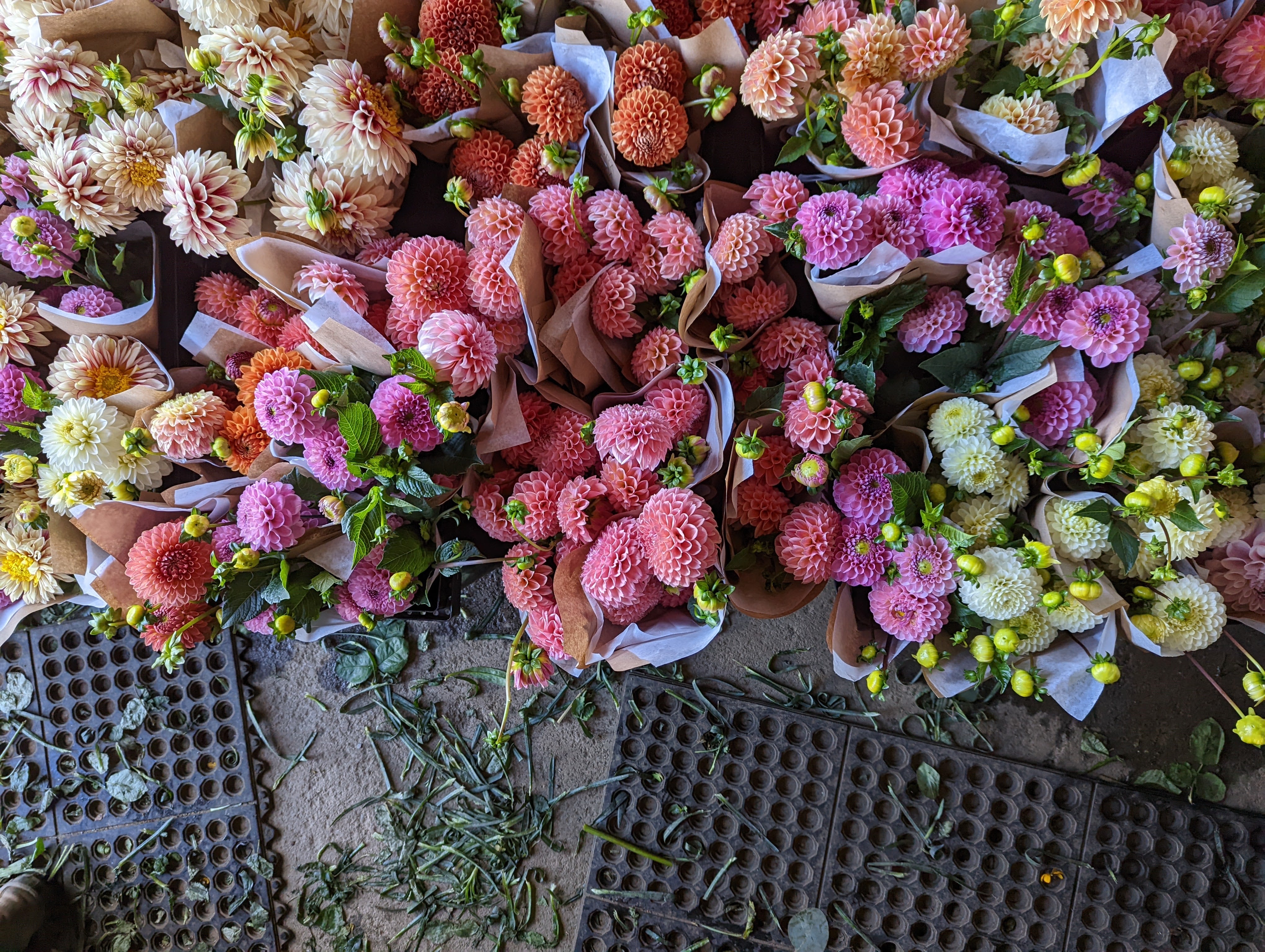
Dahlias are among our favorite flowers and are also beloved by gardeners around the world. There are over 57,000 different cultivars, so they come in a wide range of colors and shapes, are ultra-productive, and can add a vibrant touch to any garden or floral arrangement. However, growing dahlias can be a little intriguing for some, especially if you live in an area with cold winters, like us, because they don't survive frost. So we dig up dahlia tubers every fall, store them over the winter, and replant them each spring.
In this blog post, I share some tips on how to grow dahlias to allay any fears and encourage you to add dahlias to your garden !

Dahlia Reproduction
Dahlias reproduce through a combination of sexual and asexual reproduction. Sexual reproduction occurs when flowers are pollinated and produce seeds. However, dahlias grown from seed may not produce flowers identical to their parent plant because they may inherit different traits from their ancestors.
Asexual reproduction, on the other hand, involves growing new plants from existing plants without the need for pollination or seeds. This is usually done by taking cuttings or dividing tubers. These allow for the creation of a copy of the parent plant and therefore, the same characteristics such as flower shape and color.

Cuttings
Taking cuttings involves planting tubers with the necks above the ground, then removing the growing stems and rooting them in potting soil. Once the cuttings have developed roots, they can be transplanted into pots or the ground. Cuttings are taken early in spring so that they are mature enough to be transplanted at the same time as the tubers are planted in the ground.

Tubers
Tuber division is another method of asexual reproduction and involves separating tubers from an existing plant to create new plants. This is done in the fall when the above-ground portion of the plant has died following a hard frost or after it has spent at least 120 days in the garden. The clump of tubers is then carefully dug up, carefully divided into individual tubers (making sure to keep at least one "eye" per tuber), stored in a cool place in plastic boxes filled with wood shavings over the winter, and then replanted one by one in the ground the following spring!

Culture
So we plant individual dahlia cuttings and tubers in spring (when all risk of frost has passed) for flowering around 90 days later.
1- Choose the right tubers
When growing dahlias, choosing the right tubers is important. You want tubers that are plump and firm to the touch. Avoid tubers that are soft, shriveled, or moldy. For dahlias, tuber size has nothing to do with plant performance. Some cultivars, for example, will produce enormous blooms on beautiful, bushy plants grown from very small tubers.
2- Plant in the right place
Dahlias need plenty of sunlight to grow and thrive. Choose a location in the garden that receives at least six hours of direct sunlight per day. It's also important to plant the tubers in well-drained soil. If the soil is heavy or clayey, consider loosening the soil with a broadfork , for example, and amending it with compost to improve drainage.
3- Plant at the right time
In any area where there is a chance of ground frost, the best time to plant dahlia tubers is late May, after the danger of the last frost has passed. If planted too early, the tubers may rot in the cold soil or their growth may be stunted, or even seriously compromised by temperatures below 0°C.
4- Plant the tubers correctly
Dahlia tubers are planted sideways in a hole or trench about 3" (8 cm) deep, with a little organic compost and organic balanced fertilizer added, and then covered with soil. The tubers and/or cuttings are planted 12" (30 cm) apart. Here on the farm, a 3" (8 cm) trench is dug in the center of a 30" (75 cm) wide bed and every 12" (30 cm) is planted in the trench.
It's important not to damage the "eyes" during the process. These are the small bumps on the top of the tubers. These will eventually become the stems of the plants. If you're planting in sandy soil that drains well, water the tubers regularly after planting. If the soil is more clayey, wait until they emerge from the soil before you start watering them.
5- Water regularly, pinch and support
Dahlias need regular watering once they emerge from the soil, especially during hot, dry weather. Water them thoroughly throughout the season, ensuring the soil is moist but never waterlogged.
When the plants reach 12" (30 cm) in height, pinch the central stem, that is, completely cut off the end of the main stem to promote the proliferation of the secondary stems and therefore the number of flowers that will be produced.
Dahlias also often need support because the plants grow quite large and sometimes too heavy under the weight of the many flowers on their stems. Therefore, we install contour ropes, fixed to stakes, on each side of the plants once they have reached about 40" (100 cm) in height.

In conclusion, growing dahlias can be a bit overwhelming, but with the right preparation, care, and conditions, you can easily enjoy these beautiful flowers for a good part of the season.


2 comments
@Debbie Hornig yes! https://www.floramama.ca/collections/tubercules-de-dahlias
do you still have some tubers for sale?