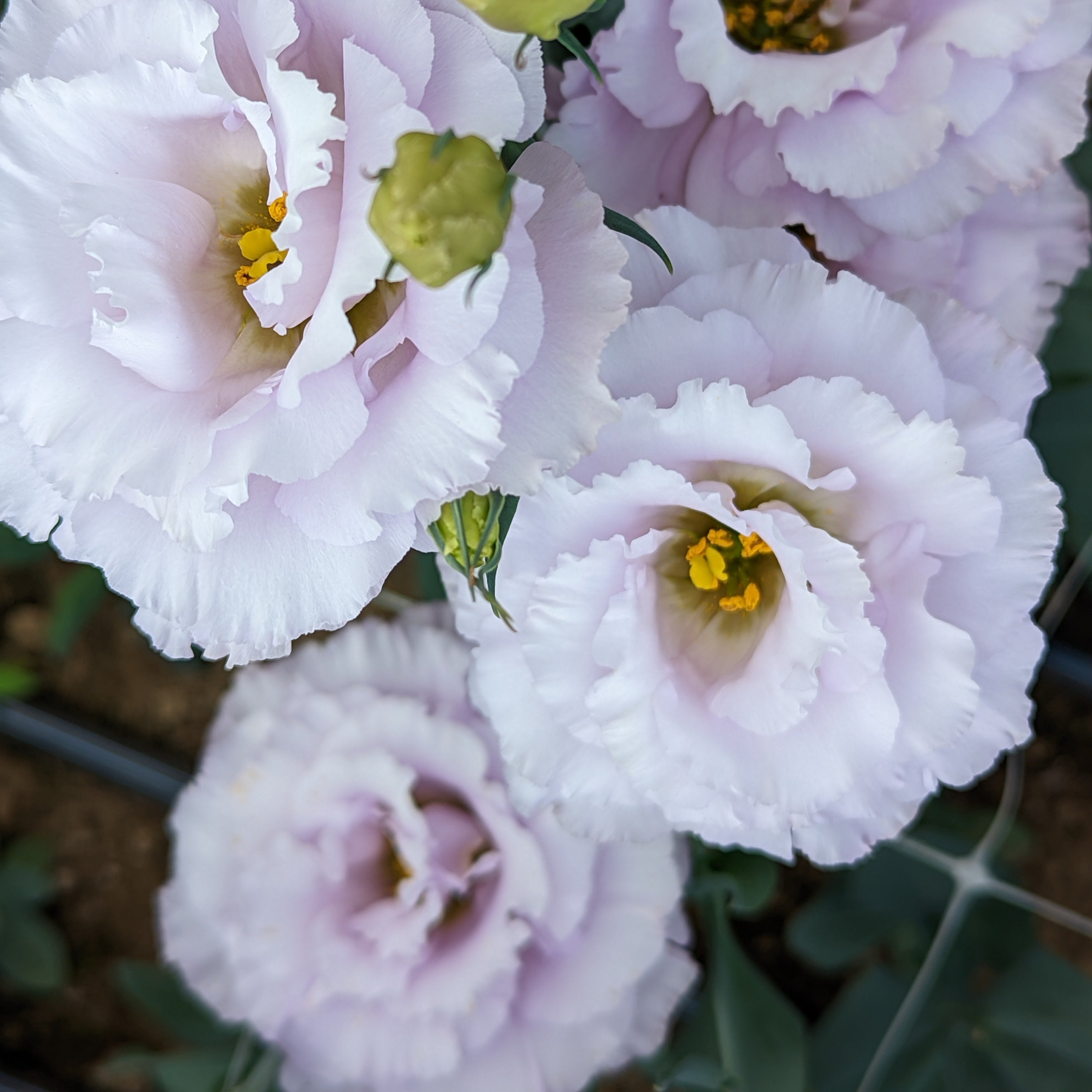

Lisianthus, often perceived as a fickle crop, is actually a flower that requires patience and expertise. Its exceptionally long growth cycle—five to six months—can discourage those in a hurry. However, those who take the time to understand its intricacies are richly rewarded. At the end of this journey, lisianthus offers flowers of rare elegance, with soft hues and delicately undulating petals. And the icing on the cake: they last in a vase for more than ten days, prolonging their magic long after harvest. 
A flower with refined charm
A member of the Gentianaceae family, lisianthus fascinates with its sophisticated, almost unreal appearance. Its most popular varieties, such as Voyage Apricot , Voyage Pink , Voyage Lavender and Corelli ™ Light Pink , appeal to florists and those who love refined gardens.
Patience as the key word
Growing lisianthus means accepting a long-term commitment. The cycle begins in the nursery, where young plants germinate in about ten days, then grow slowly for six to eight weeks before being transplanted into a cold tunnel for three more months. In these optimal conditions, lisianthus flourishes between March and October. It can also be grown outdoors, but the results are sometimes less impressive: shorter stems, flowers more vulnerable to the elements. 
The magic of sowing
It all begins in March, when the tiny seeds are delicately placed on a finely prepared potting soil. There's no question of covering them! They need light to germinate. Kept at a constant temperature of 20˚C and 100% humidity, they take their time to hatch. The cotyledons, so small that you could almost miss them, finally appear after about ten days. Once germinated, they can then be placed with the other flower seedlings in a regular humidity. During this stage, if the temperature rises above 24˚C for an extended period, they can go dormant, compromising flowering.
Once the seedlings have three pairs of true leaves, they are ready to be transplanted. The soil should remain moist but never soggy—a delicate balance to avoid fungal diseases.
Three key phases
Lisianthus cultivation follows three main stages:
-
Germination : temperature 20˚C, humidity 100%.
-
Nursery growth : temperature between 20˚C and 12˚C, preferably constant around 18˚C
-
Growth in a cold tunnel : maintain a temperature around 18˚C as much as possible
In summary, we try to maintain around 20˚C at all times and avoid above 24˚C at all costs during the germination and seedling phase. Once transplanted, we do what we can to maintain 20˚C! Keep in mind that lisianthus prefer cooler temperatures than warm ones.
Once the plants reach 12 inches (30 cm) in height, a horizontal trellis net is installed after weeding to support the stems and prevent them from bending under the weight of the flowers. 
A satisfactory harvest
After five to six months of effort, the long-awaited harvest finally arrives. The first flower of a plant is always earlier and is not taken into account. Harvesting begins when three (or more) subsequent flowers are fully open. Flower buds that are still closed but colorful are more likely to open in a vase, however, small buds that are still green will not open. This is why it is better to wait until a few flowers are already open before starting to harvest. 
A demanding flower, an unequalled reward
Growing lisianthus involves a process in which temperature plays a key role. But it also means witnessing, after months of patience, bloom flowers of incomparable beauty with their delicate shades, slender stems, and exceptional resilience. A challenge, certainly, but one that is well worth the effort.