
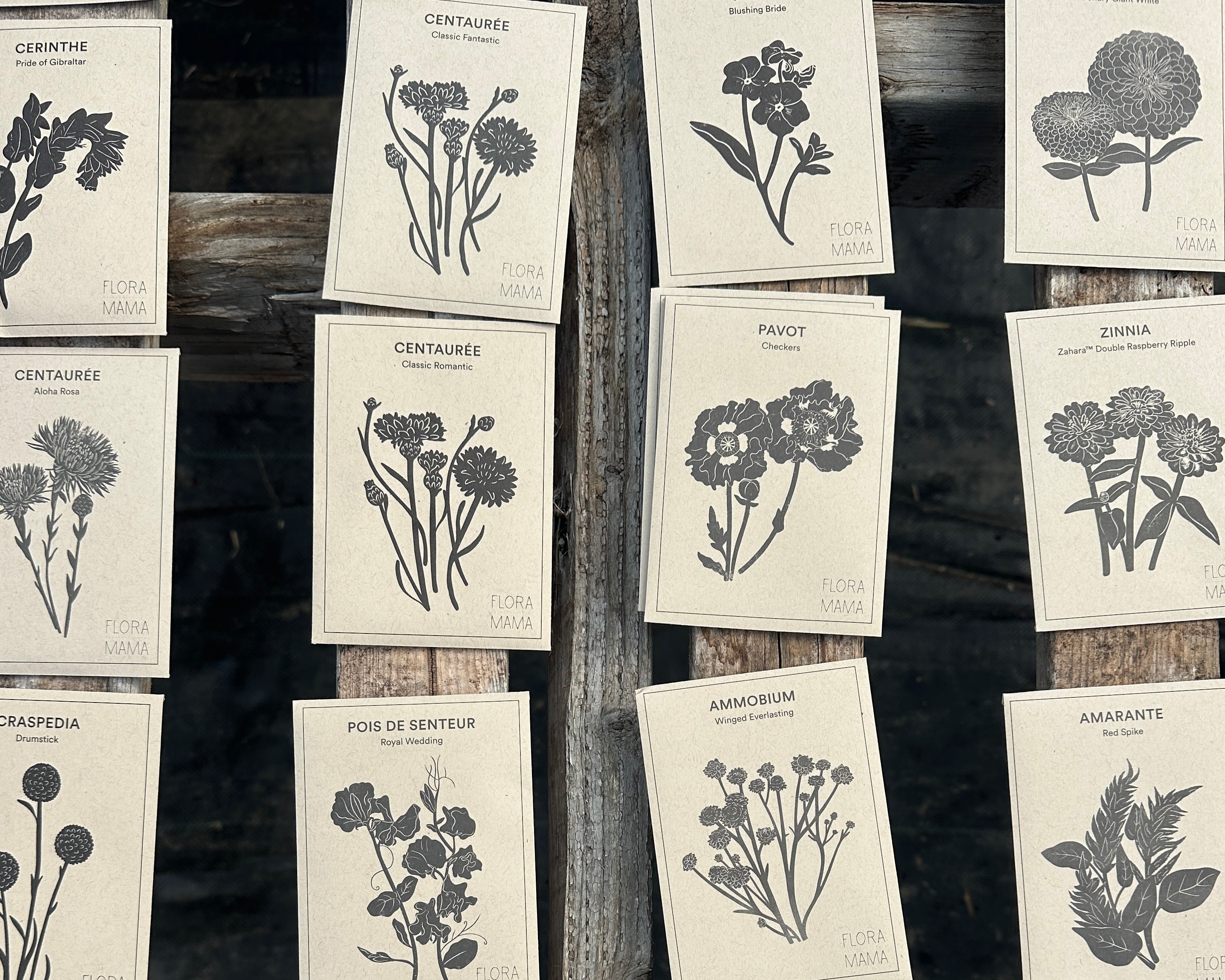
When you receive your seed packets, it's a bit like opening a promise of spring. Each seed carries within it a whole potential: that of a flourishing garden, a joyful balcony corner, a bouquet to give as a gift or to treat yourself. To keep this promise alive until the time comes to sow, all you need is a nice, cozy nest... in other words, the right storage conditions.

What exactly is a seed?
A seed is much more than a small brown or black dot at the bottom of a bag. It's a life on hold. A plant embryo, wrapped in a protective shell, simply waiting for the right conditions—warmth, moisture, light—to awaken and grow.
Inside each seed are three essential elements: a tiny miniature plant (the embryo), a food reserve to kick-start its growth (the endosperm), and a protective covering (the seed coat) that keeps it safe.
Until it's given the signal to start, it remains dormant, as if frozen in time. This is what makes seeds so precious... and also so sensitive to how they are stored.
Storing your seeds correctly therefore prolongs their vitality and their germination power — and ensures successful sowing when the time comes.
The perfect balance: cool, dry and dark
Seeds are patient, but somewhat sensitive beings. To properly preserve them, they must be protected from three things: heat, humidity, and direct light. These elements can prematurely trigger their life cycle or reduce their germination capacity.
Here's what they like:
-
A cool temperature: between 5°C and 15°C is ideal. A basement, a cupboard against a north wall, or even the bottom of the refrigerator can work.
-
A dry place: Humidity is their main enemy. It can cause mold or unintentional germination.
-
Darkness: Light stimulates certain seeds and can also damage more fragile ones.
Which containers should you choose?
There is no single container, but a few options stand out for their effectiveness, practicality, and sometimes charm.
Metal boxes
Empty biscuit, tea, or coffee tins are suitable: opaque, sturdy, and relatively airtight and moisture-proof. They also offer a nice way to organize your sachets. You can slip a small silica sachet or some dry rice wrapped in a cloth into them to absorb any residual moisture.
Rigid plastic airtight containers
Food containers work well, as long as they seal tightly. They are often transparent, so they should be stored in a dark place or inside another opaque container.
Index boxes
Increasingly popular, these boxes allow you to sort the bags alphabetically or by theme. They're quick to access and everything stays neatly in place.
Glass jars
Mason jars are classics, but they're only effective if they're perfectly dry and stored away from light. Since glass is transparent, it's best to keep them in a closed cabinet to protect the seeds.
Keep the original bags
The packets in which you receive your seeds contain valuable information that helps you to successfully sow: name of the variety, sowing period, days to maturity, height, type of plant, etc.

How long can seeds be stored?
Seed lifespan varies depending on the species.
In general :

How do you know if a seed is still viable?
Even with proper storage, you may still have doubts about the vigor of an older bag. Before sowing a whole tray, you can do a small home germination test.
This simple test can prevent a lot of disappointment—and it's also a great opportunity to observe the magic of germination up close.
The germination test
-
Take a damp paper towel. Moisten it slightly and then place a few seeds on it (10, if possible, to make it easier to calculate the percentage).
-
Fold the paper towel in half to cover the seeds. Place the bag in a sealed plastic bag to retain moisture. Store in a warm place (around 20-25°C), but away from direct light.
-
Check the condition of the seeds. Depending on the species, germination can take a few days or up to a few weeks.
Calculate the germination rate
Once the seeds have finished germinating, you can easily calculate their germination rate:
-
Count the number of seeds that have germinated.
-
Divide this number by the total number of seeds you have germinated.
-
Then multiply the result by 100 to get a percentage.
For example, if you put 10 seeds to test and 8 germinated, the calculation would be:
Germination rate = (8/10) × 100 = 80%
This means that 80% of the seeds are viable, and you can expect good success with your sowing. If the germination rate is less than 50%, this may indicate that it is time to renew the seeds. Note that some varieties naturally have a lower germination rate, particularly some poppies.
The logic behind the germination rate
The germination rate tells you how many seeds in your packet are still viable. If this rate is lower than expected, it means that some seeds will not germinate. In this case, you will need to adjust the number of seeds you sow. For example, if the germination rate is low, you will need to sow more seeds to compensate for this loss of viability and maximize your chances of success. This may involve sowing more seeds per pot or on the same area, as appropriate. This approach helps restore a higher germination rate and ensures that your seedlings will have enough plants that germinate and grow properly.
Can seeds be stored in the freezer?
Yes, it's perfectly possible to store your seeds in the refrigerator or freezer, and both options can be effective. However, whichever you choose, it's essential to properly protect your seeds from the moisture present in these devices. Moisture can affect seed viability, so store them in airtight containers.
If you choose to store in the refrigerator, place your seeds in tightly closed glass jars, preferably opaque ones, to protect them from light. This method can double the lifespan of your seeds compared to storing them at room temperature. It's a good option if you have a few seeds to save for next year.
If you want to go further, freezing is an even more effective solution. The cold slows down the absorption of nutrients in the seeds, which can extend their lifespan even longer. To do this, simply follow the same steps: use an airtight jar or a tightly sealed plastic bag to avoid moisture. Once you're ready to sow them, let them slowly return to room temperature before opening them to avoid condensation inside the container.
Keeping an inventory: a small gesture that changes everything
When you start accumulating seed packets, you sometimes forget what you have, what's open, what worked well, or what you'd like to try. Keeping a small notebook where you note varieties, purchase dates, sowing dates, and a few personal observations can make all the difference.
This helps you plan your next orders, avoid duplicates... and see your own gardening progress through the seasons. It's also a great memory tool, especially when it comes to dreaming about next year's blooms.
A little ritual that feels good
Caring for your seeds also means caring for your future garden. It's a simple, almost tender gesture that follows the rhythm of the seasons. It's also a great way to organize your ideas, plan future blooms, and dream up new arrangements.
And if a bag is empty, it will be the perfect opportunity to discover a new one, to try a different variety, to let yourself be surprised.
Need to replenish your stash or get some inspiration for your next planting season? Take a look at our carefully curated collection, filled with beauties ready to delight your garden.


1 comment
Bonjour !
J’ai acheté de la Lavande en petit pot. Je ne l’ai pas encore semée. Étant donné que c’est une vivace, est-ce que je peux la semée maintenant ? On est le 10 août.
Merci !