
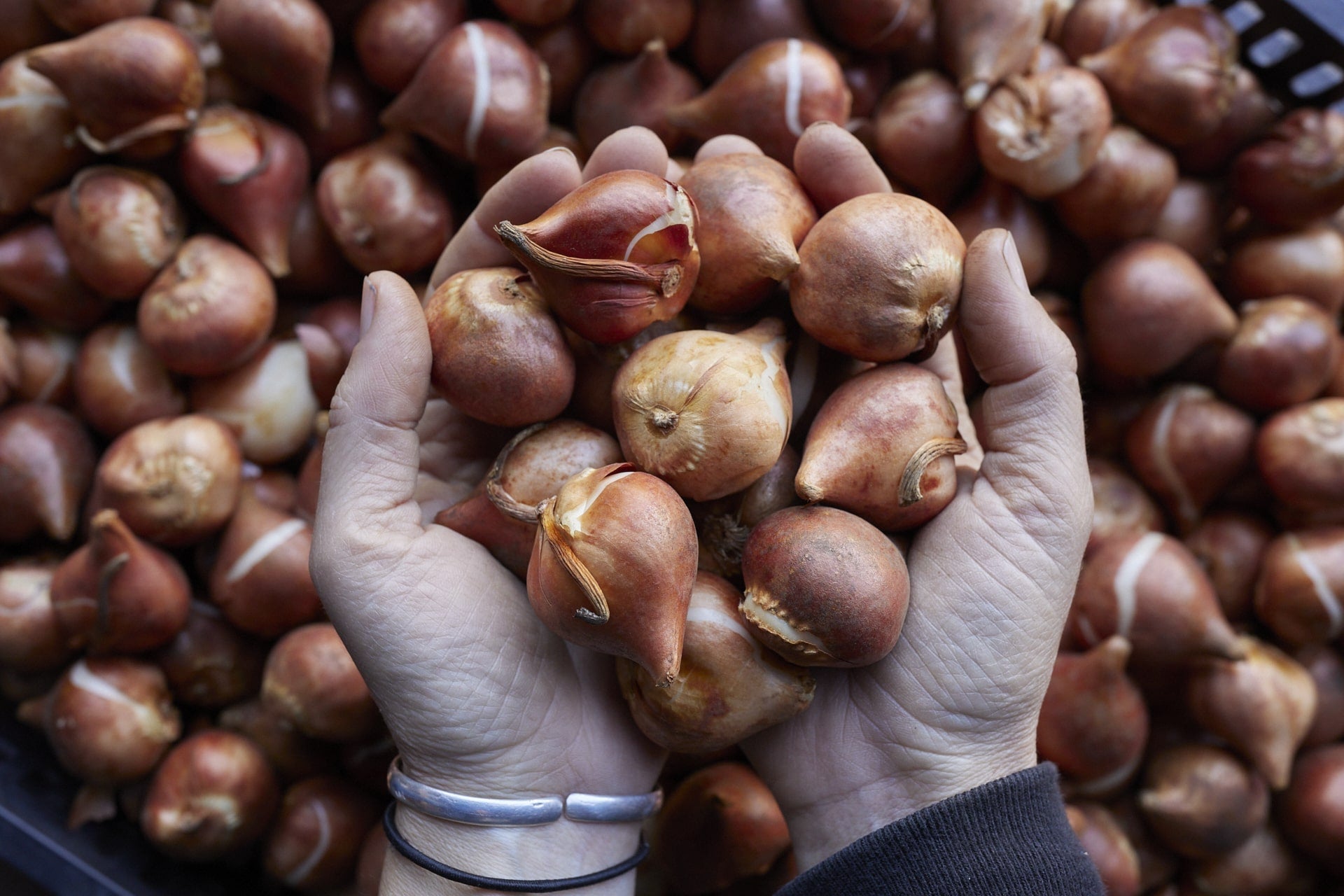
What a joy it is when the frenzy of autumn bulb buying gives rise to abundant armfuls of flowers in spring, delighting us with their beauty and color after a long winter. However, sometimes we are forced to share this dream... Whether it's deer in the countryside or squirrels in the city, many pests are interested in tulip bulbs, which can compromise the long-awaited abundance.
So today we're sharing the various methods we've gleaned here and there at your disposal to best protect your precious bulbs and ensure the arrival of your flowers. Here at the farm, we're fortunate not to have any pest problems with the bulbs that grow in spring. Except for tulips, unfortunately. We'll explain our somewhat intense but relentless method below.
We haven't tested most of these alternatives ourselves because we simply don't have squirrels on the farm, but several of these tips have been reported to us by customers who use these tricks themselves.
To begin with, it's important to point out that very few bulbs are actually of interest to pests. Species such as daffodils, crocuses, peonies, alliums, fritillaries, chionodoxa, hyacinths, bulbous irises, leucojum, and snowdrops are pest-resistant bulbs, so there's no risk of losing them.
Yes, but what about tulips?
Tulips, on the other hand, can be tempting prey for pests, so here are some tips to maximize your chances of achieving the long-awaited bloom.
Planting Depth : Planting your bulbs a little deeper can help keep them inaccessible. At the farm, we usually plant bulbs 6' (15 cm) deep, however, planting them 8' (20 cm) can help protect you from unwanted attacks. Be careful not to go any deeper, as the stems may have difficulty emerging from the soil.
Change your planting location : Squirrels will tend to return to where they have found food in the past. Since specialty tulips are short-lived perennials, plant your new bulbs in different locations to create a crop rotation and make it harder for squirrels to find food.
Install barriers (preferred method) : It can help to install fine mesh over the bulbs once they have been planted. You can either install the mesh underground and over the bulbs, or you can make a sort of mesh cage above the ground to enclose the tulips inside BEFORE they grow.
Special squirrel-proof mesh is available on the market, but chicken wire can also work! While your tulips will grow through it, the mesh will prevent pests from digging into and accessing your bulbs. Bulb baskets are also available, but they are quite expensive and are no more successful than mesh below the soil surface.
As for deer, who are more interested in young, tender shoots, a fairly high fence will be your best ally. On the farm, our plantations are surrounded by forest and therefore very tempting for deer that live in the woods. We therefore use removable electric fencing nets as soon as the tulips appear!
Mix up your plantings : While we are big fans of mass plantings, which create dramatic effects, alternating between pest-resistant and pest-prone plants can go a long way in deterring squirrels and other rodents.
Use repellent substances :
Natural fertilizers such as coffee grounds or chicken manure pellets can be used to repel pests. It's important not to incorporate them into the soil and to leave them on the surface of the soil. Their smell will disturb squirrels and enrich your crops at the same time.
Other substances mixed with water will leave a strong and unpleasant odor that will repel pests. These include cayenne pepper, garlic powder, peppermint oil, lavender oil, and apple cider vinegar. It's also possible to sprinkle a little inside the hole when planting.
It is also possible to simply spread your scent (hair, soap flakes) or that of your pets (fur, urine). Whichever solution you choose, it is important to note that the repellent must be spread regularly so that the scent remains present enough to be effective.
Use hardware repellents : There are spray or ultrasonic repellents triggered by motion detection. Whether it's the surprise effect of the water jet or a shrill sound, both options can be very effective! However, it's important to choose your equipment carefully because there are a wide range of options.
Reduce the olfactory traces of your plantings : Once your bulbs are planted, you can collect the bulb peels that often remain on the ground and water the soil well. This will reduce the olfactory clues left to squirrels as to the presence of your tulip bulbs.
In addition to ensuring that these little creatures are kept at bay with these suggestions, we remind you that several factors can influence the proper development of your bulbs: quality of the soil, drainage of the planting location, lack of light, planting depth, bulb mold, etc.
Now that you have all the tools in your pocket, grab your shovels, trowels and chicken wire to outwit all the squirrels in the neighborhood and plant the most beautiful garden ever this fall!


